

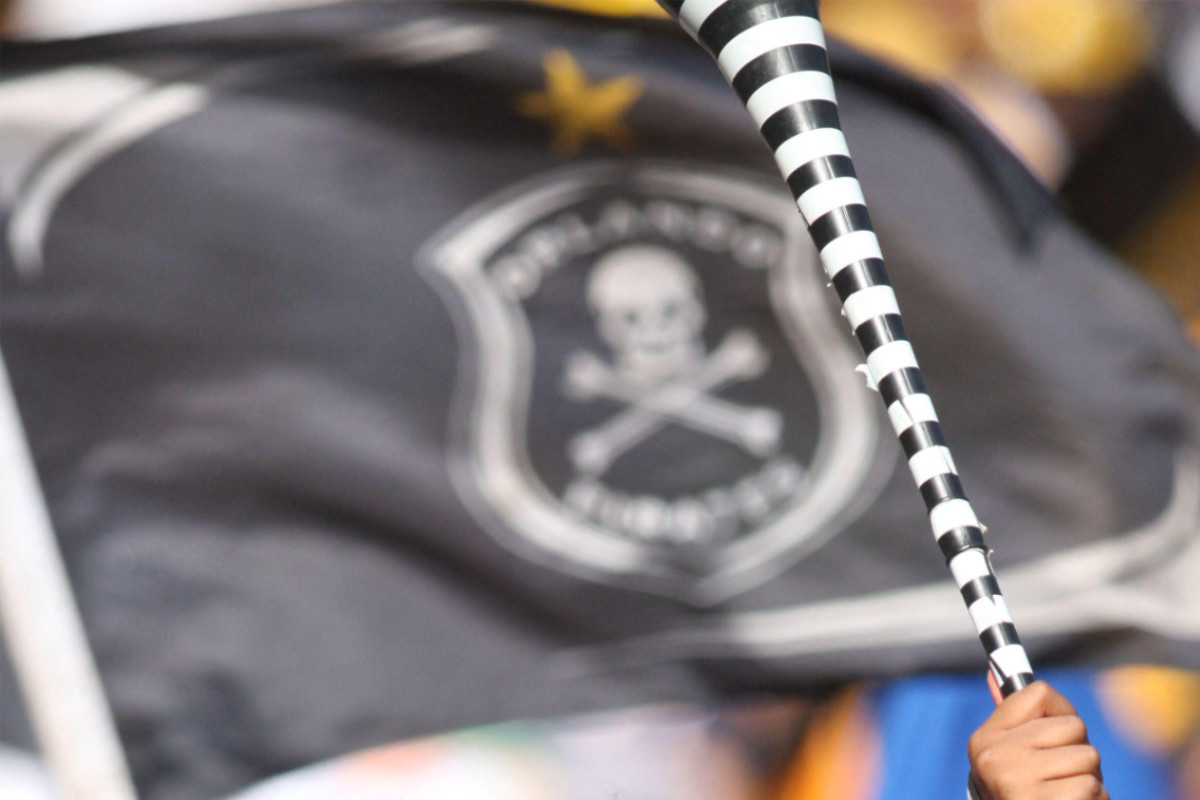
Orlando Pirates are more than a football club; they are the heartbeat of Soweto and a symbol of South African resilience. Founded in 1937, the “Buccaneers” wear their black and white colours as a badge of honour, representing a rich history of defying odds and playing with distinct township flair. Backed by “The Ghost”—their fervent fanbase—they remain one of the continent’s most iconic sporting institutions.
The spirit of Orlando
Born in the dusty streets of Orlando East, the club quickly rose to become the “People’s Team” long before the modern era. They were the first South African club to conquer the continent in 1995, earning a permanent star above their crest. This victory cemented their status not just as local giants, but as African royalty, forever linking the skull and crossbones with glory.
The rivalry with Kaizer Chiefs, known as the Soweto Derby, divides the nation twice a year, yet Pirates maintain a unique identity rooted in flair and grit. Whether it’s the legendary Jomo Sono in the past or current stars like Patrick Maswanganyi dancing on the ball, the mandate remains the same: entertain the people and fill the trophy cabinet.
| Item | Detail |
|---|---|
| Name | Orlando Pirates Football Club |
| Founded | 1937 |
| City | Soweto (Johannesburg) |
| Colours | Black & White |
| Nickname | The Buccaneers, Sea Robbers |
| Stadium | Orlando Stadium (37,139) |
| Squad value | ~€25.9 million |
The “Pirates DNA” is a blend of artistic expression and militancy on the pitch. Fans demand “Kasi flavour”—skill and showboating—but never at the expense of results. The atmosphere at Orlando Stadium is spiritual, where songs from “The Ghost” can intimidate opponents before a ball is even kicked.
Team profile
Orlando Pirates – Season 2024/25: A defensively robust unit that mastered cup competitions while pushing hard in the league. Under José Riveiro, they combined tactical discipline with moments of individual brilliance.
- 1️⃣ Discipline – Cards per match
Data: High foul count (~14/match)
Indicators: Aggressive regaining of possession
Reading: 🟨 Committed but disciplined - 2️⃣ Fouls committed vs fouls suffered
Data: Committed 13.9 vs Suffered 12.0
Indicators: +1.9 differential
Reading: 🛑 Destructive (many fouls committed) - 3️⃣ Offensive production – xG vs goals
Data: 1.54 Goals vs 1.73 xG
Indicators: Underperformance of ~0.19
Reading: 😬 Wasteful (goals < xG) - 4️⃣ Defensive solidity – Goals conceded per match
Data: 0.71 goals conceded
Indicators: Top-tier organisation
Reading: 🧱 Solid block - 5️⃣ Clean sheets
Data: 12 clean sheets in 28 matches
Indicators: 43% shutout rate
Reading: 🧤 Keeper+defence on top - 6️⃣ Penalties conceded and won
Data: Won 1 in 12 (sample)
Indicators: Box presence from wingers
Reading: 🏃 Dribblers/box presence - 7️⃣ Overall efficiency – Points per match
Data: ~2.18 points per match
Indicators: 19 Wins in 28 games
Reading: 🏆 Dominant
Orlando Pirates defined the 2024/25 campaign with defensive steel and cup supremacy. While sometimes Wasteful in front of goal, their Solid backline—led by goalkeeper Sipho Chaine—ensured they remained Dominant in earning points. They evolved into a Committed side that suffocated opponents, making them the team to beat in knockout formats.

History and defining moments
From humble beginnings as the Orlando Boys Club, Pirates transformed into a political and sporting heavyweight. Their journey mirrors the struggle and triumph of black South Africa, giving them a significance far beyond the pitch.
Early years and the defiance
Established in 1937, the club was initially formed by teenagers in Orlando East. Under the guidance of Bethuel Mokgosinyana and later the influence of “Father of Soweto” James Mofokeng (Sofasonke Mpanza), the club became a beacon of hope. They provided an identity for the oppressed, playing with a style that defied the rigid structures of the apartheid era.
The 1970s saw the club’s greatest split when former star Kaizer Motaung left to form Kaizer Chiefs, creating a rivalry that would define South African sport. Despite this, Pirates remained a powerhouse, winning multiple NPSL titles in the 1970s with legends like Jomo Sono dazzling crowds. The “Sea Robbers” nickname was earned through their relentless attacking raids on opposition defences.
The African star and the Double Treble
1995 remains the golden year in the club’s history. Against all odds, Pirates travelled to Abidjan and defeated ASEC Mimosas to win the CAF Champions League, a feat immortalised by Jerry Sikhosana’s winner. This victory earned them the distinction of being the first Southern African club to wear a star above their badge.
In the modern PSL era, the “Double Treble” seasons of 2010/11 and 2011/12 stand unmatched. Under Ruud Krol and later Augusto Palacios, the team swept every domestic trophy available—back-to-back league titles, MTN8, Telkom Knockout, and Nedbank Cup trophies. It was a period of absolute dominance that re-established Pirates as the kings of South African football.
| Key date | Event |
|---|---|
| 1937 | Club founded as Orlando Boys Club |
| 1971 | Won the first National Professional Soccer League title |
| 1995 | Crowned African Champions (CAF Champions League) |
| 2001 | Won the first league title of the modern PSL era |
| 2011 | Achieved the first historic domestic “Treble” |
| 2012 | Secured a second consecutive “Treble” |
| 2024 | Claimed a historic third consecutive MTN8 title |
Honours and sporting performance
Orlando Pirates boast one of the most decorated trophy cabinets on the continent. They are specialists in cup competitions, often finding an extra gear when silverware is directly on the line. Their 1995 continental triumph remains the crown jewel, but their domestic consistency is equally impressive.
Domestic dominance and the African dream
The club has won the league title nine times across the NPSL, NSL, and PSL eras. However, their affinity for knockout football is unrivalled, with over 10 FA Cup (Nedbank Cup) wins and a record-breaking haul in the Top 8 (MTN8) competition. They are the only club to have won the MTN8 three times in a row, a record sealed in the 2024/25 cycle.
Internationally, besides the 1995 Champions League, they won the CAF Super Cup in 1996. They have also come agonizingly close to adding more continental stars, finishing as runners-up in the 2013 Champions League and the 2015 and 2022 CAF Confederation Cups. These near-misses fuel their constant ambition to conquer Africa once again.
Recent seasons performance
In the last few seasons, Pirates have re-emerged as a serious force under Spanish coach José Riveiro. The 2023/24 and 2024/25 campaigns were defined by cup success, with the team turning the MTN8 into their personal property. While the league title race against Mamelodi Sundowns has been tight, Pirates have consistently finished in the Champions League spots (2nd).
The squad has seen the rise of young talents like Relebohile Mofokeng, whose flair brings back memories of the club’s traditional style. Defensively, they have been one of the stingiest teams in the league, often recording the highest number of clean sheets per season, providing a perfect platform for their cup runs.
| Year | Title |
|---|---|
| 1971 | NPSL Champions |
| 1973 | NPSL Champions |
| 1994 | NSL Champions |
| 1995 | CAF Champions League Winners |
| 1996 | CAF Super Cup Winners |
| 2001 | PSL Champions |
| 2003 | PSL Champions |
| 2011 | PSL Champions |
| 2012 | PSL Champions |
| 2023 | MTN8 Winners |
| 2024 | Nedbank Cup Winners |
| 2024 | MTN8 Winners |